
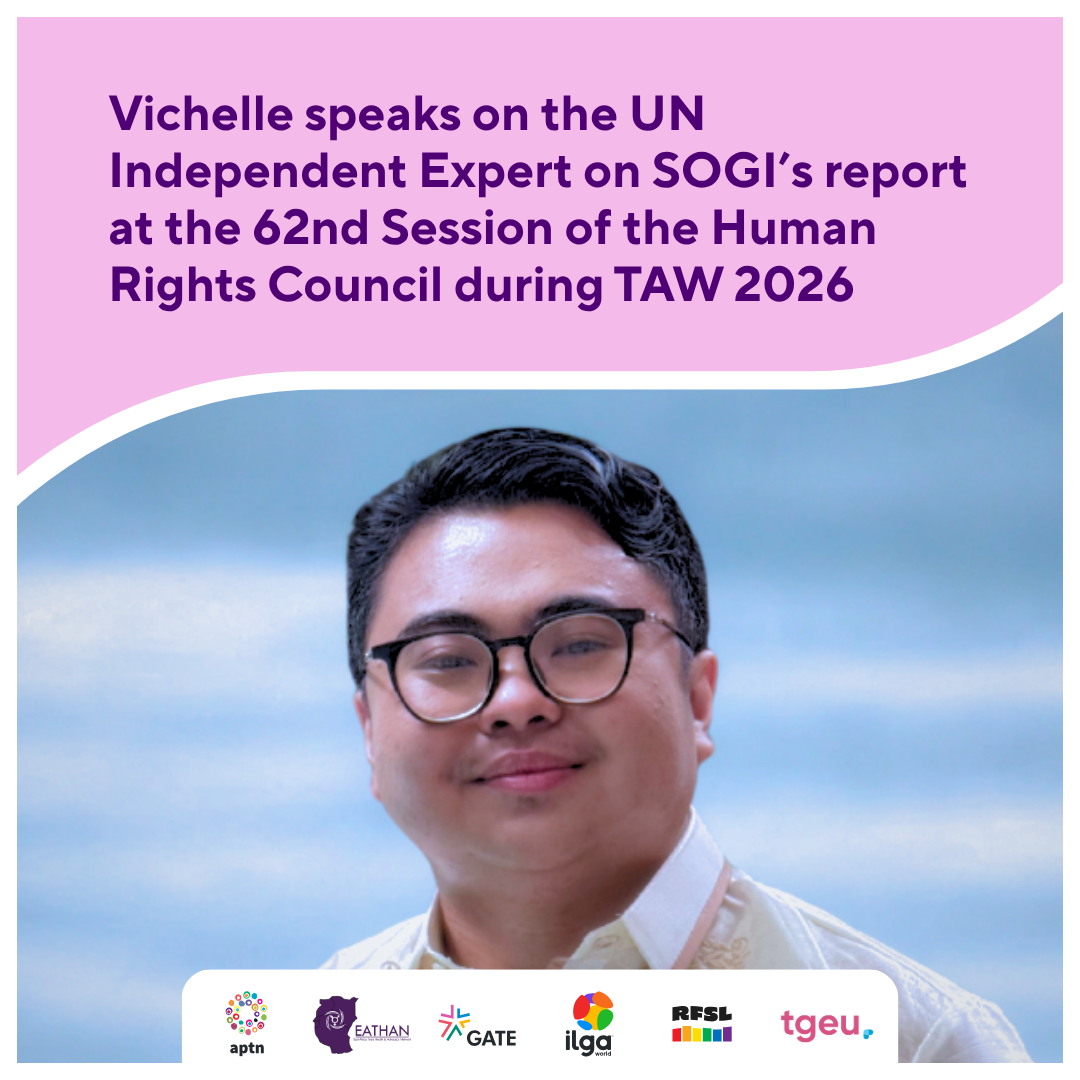
Vichelle Yumuya, our delegate from the Philippines, got a chance to speak in the Interactive Dialogue with UN’s Independent Expert on Sexual Orientation and Gender Identity regarding their annual thematic report on Violence and Discrimination Experienced by Lesbian, Bisexual and Queer (LBQ) Women.
As an aspiring lawyer in his country, Vichelle’s advocacy is deeply rooted in and personal experience and community work his desire for trans people to be better represented in the law and policy space.

Highlights of the statement:
- Vichelle welcomed the IE SOGI’s report that states that violence and discrimination against LBQ women is rooted in patriarchal systemic oppression.
- Shared that as trans and non-binary people, we face many similar patterns of violations to LBQ people, which is often enforced by patriarchal influence in our contexts.
- Highlighted that trans feminine people are often denied women-centred protections but trans masculine and non-binary people are often rendered invisible.
- Urged mandate and State members to include all trans masculine, feminine, and non-binary people in violence documentation and protection frameworks at the local, regional, and UN levels.
- Called for immediate and coordinated actions to decriminalise and legally recognise trans and gender-diverse identities and end all forms of violence against us.

Quote from Vichelle:
“One moment that really surprised me is how open each country is in hearing the contexts and situations of transgender people all across the world.
We have a lot of allies here in the UN that are actually listening and helping us amplify our voices as trans communities in the whole world.
My main hope is for our country (Philippines) to pass a legal gender recognition law and finally protect the rights of trans people in our community.
I hope that this goes beyond all the words of advocacy within our communities, and reaches the most rural areas in the Philippines so that they will be able to access the services and rights available for all trans people.”
 News
News

