
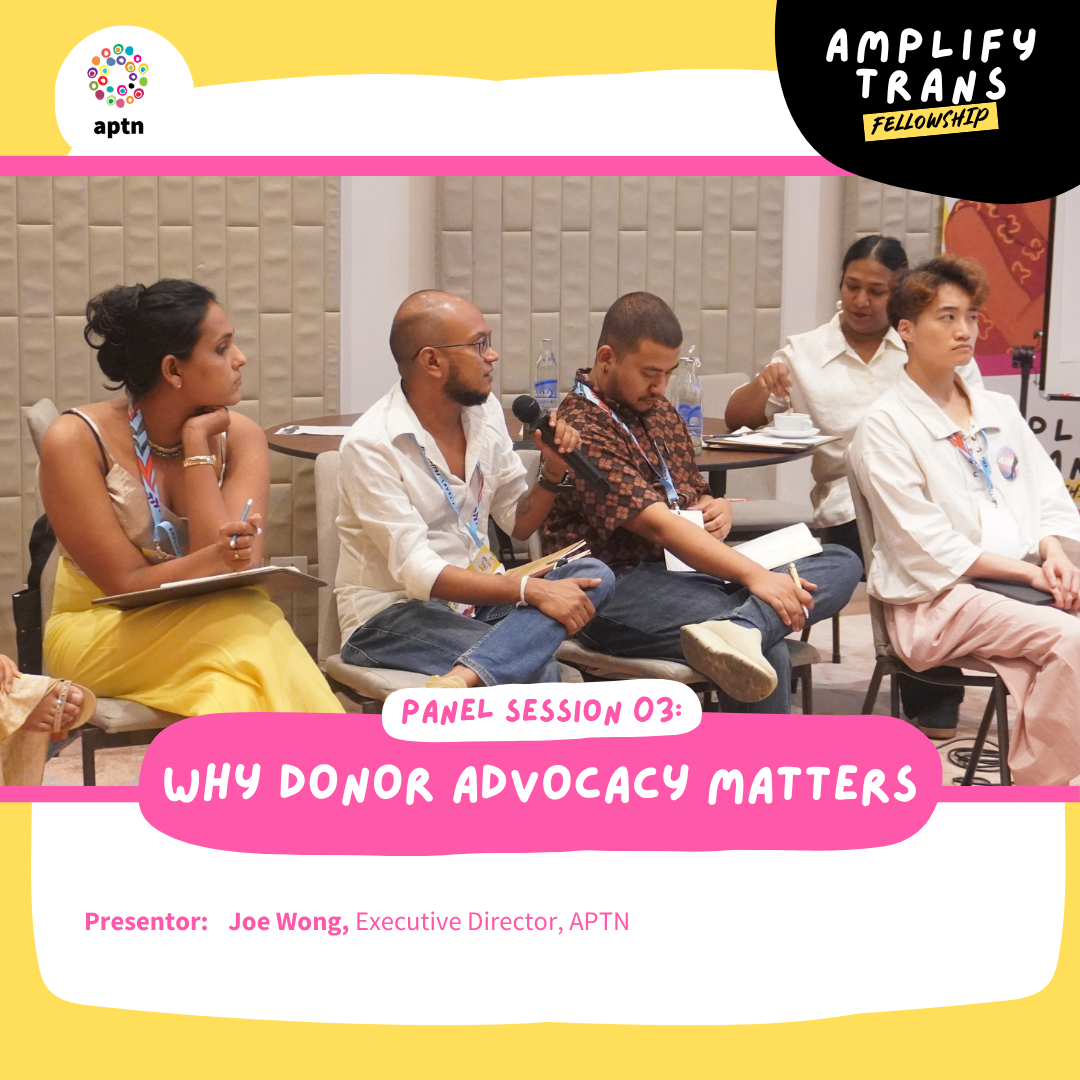
Day 2, Session 1
For many trans-led movements, securing sustainable funding feels like walking a tightrope. The reality is that while more funders exist today than before, most provide only small, short-term grants. Rarely do we see long-term commitments, and when donors shift priorities—as often happens—jobs, projects, and even organizations can disappear overnight.
At APTN, part of our mission is to ensure resources of trans movements, especially nascent and grassroot trans organizing. That’s why we join donor platforms, advocate for trans-specific funding, and push funders to go beyond project-based models toward long-term, flexible support. The creation of the ITF almost a decade ago by global trans activists was a major step in this direction—an activist-led fund designed to center our needs.
The bigger vision is clear: trans movements that are not just surviving grant to grant, but thriving, resilient, and rooted in long-term sustainability. Because our communities deserve not just to exist, but to grow strong.

Navigating Different Donor Worlds
Funding streams look very different depending on where you look:
- Multilaterals like the UN agencies operate through heavily bureaucratic processes. Applying often means 30-page proposals, exhaustive budgets, and countless indicators—a near-impossible burden for small community-based groups with limited staff.
- Government and bilateral donors move money through agencies that issue calls for proposals, but again, the process is complex and competitive.
- Private foundations can be more flexible and generous. Some will even fund infrastructure like buildings. But they are vulnerable to leadership changes—when a new director or family member shifts priorities, whole funding streams can vanish overnight.
- International NGOs (INGOs) sometimes act as intermediaries. They may invite trans groups into proposals but often take a large administrative cut—sometimes as much as 40%—leaving the local organization to do the actual work.
- Corporations can provide grants, sponsorships, or matching-gift programs. While usually small, these can add up over time. But it’s crucial to ensure that the company’s values align with the community’s.
- Individual donors are often overlooked but vital. Crowdfunding campaigns or donation boxes at events may only bring in small amounts at first, but they build solidarity and independence.
- Movement funders, in many ways, feel like the heart of the ecosystem. Led by activists, they understand community realities, allow more flexibility, and support groups that are small, unregistered, or just getting started. Some even offer wellness retreats or sabbaticals, recognizing that sustainability is about care as much as cash.
Building Relationships, Not Just Proposals
Across all these donor types, one truth stands out: relationships matter. Even the most “formal” funders are run by individuals with their own preferences and styles. Sometimes that means simply approaching with care,staying in touch and being responsive. Donors talk to one another, so your reputation—how well you manage funds, how quickly you reply, how honest you are about challenges—travels with you.
When it comes to proposals, donors are not just looking for problems; they want to see hope and possibility. Instead of focusing only on hardship, strong applications frame what change is possible with their support. And just as importantly, proposals should align with the donor’s own “theory of change.” Speaking their language—while staying true to your priorities and values—can make the difference between a rejection and a grant.
Choosing the Right Partners
Not every donor is the right fit. It’s important to ask hard questions:
- Do their values align with yours?
- Will their support uplift your community—or compromise it?
- Is the effort worth the size of the grant?
Sometimes the best decision is to walk away. Money that comes with strings attached—or from harmful sources—can cost more than it gives.
 News
News

