
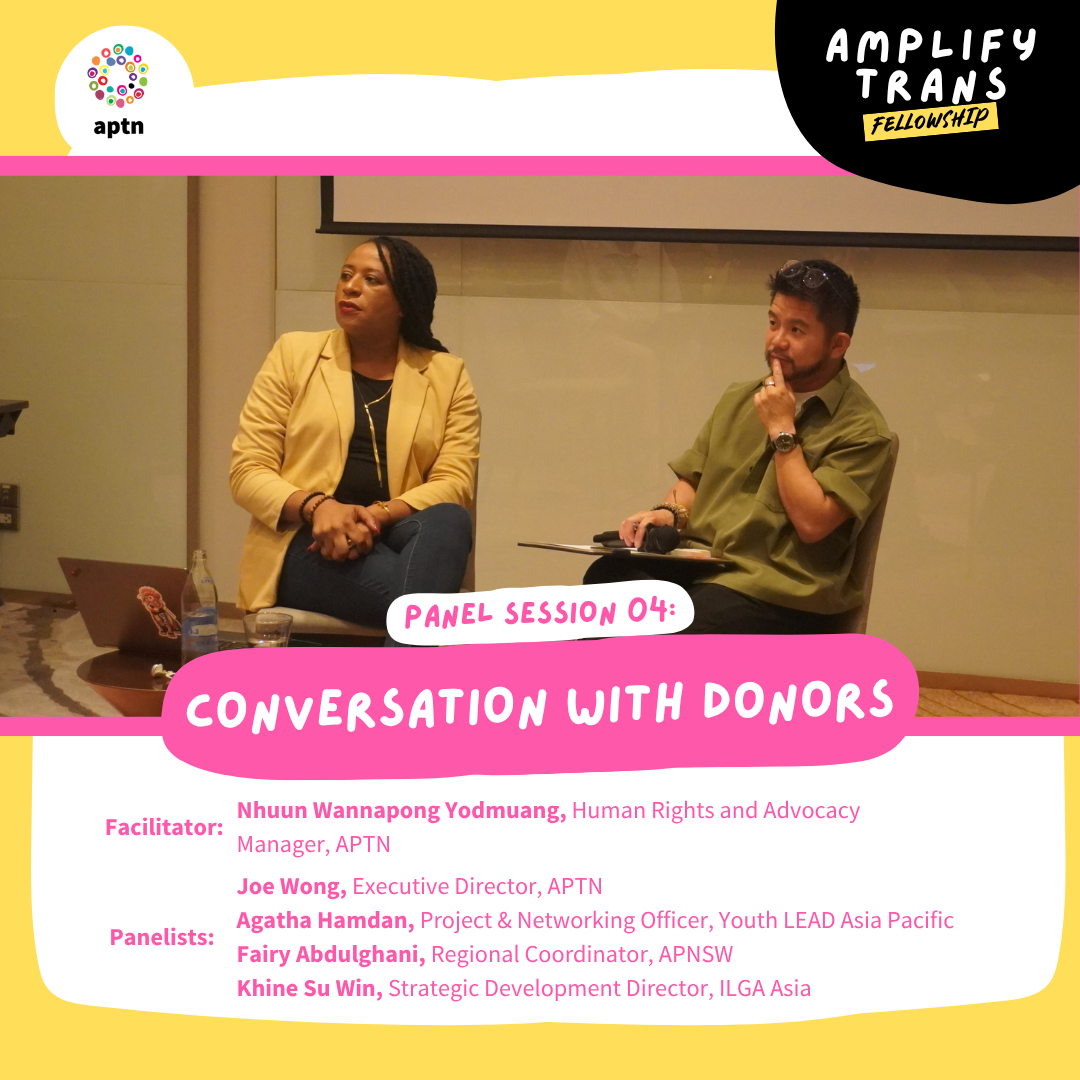
Day 2, Session 2
Facilitator: Joe Wong, Executive Director, APTN
Panelists:
- Chivuli Ukwimi, Deputy Director, International Trans Fund (ITF)
- Jyotsna Maskay, Strategic Partnerships Facilitator, Urgent Action Fund for Women’s Human Rights Asia and Pacific (UAF A&P)
- Ditilekha Sharma, Thematic Lead for Strengthening Feminist Voices, Women’s Fund Asia (WFA)

At Session 4, the focus turned to the people moving resources to our communities. Facilitated by Joe Wong (APTN), the panel featured Jyotsna Maskay (Urgent Action Fund Asia & Pacific), Ditilekha Sharma (Women’s Fund Asia), and Chivuli Ukwimi (International Trans Fund).
Urgent Action Fund Asia & Pacific (UAF A&P) supports activists with rapid response grants available all year round. Their flexible funding covers urgent needs like relocation, digital security, and even gender-affirming care. Since 2017, they’ve backed over 135 applications across the region.
Women’s Fund Asia (WFA) just celebrated 20 years of feminist grantmaking. From long-term support for grassroots groups to crisis response and travel grants, WFA prioritizes self-led organizations and participatory decision-making. Facing global funding cuts, they are diversifying donors while staying true to feminist values—even turning down money that comes with restrictions.
International Trans Fund (ITF) is the only global fund dedicated entirely to trans movements. Since 2017, ITF has moved $7.8 million to 214 trans-led groups in 99 countries. With flexible seed, thrive, and multi-year grants, they practice trust-based, participatory grantmaking. In the face of defunding, ITF is investing in resilience, solidarity networks, and even launching a $1 million economic empowerment fund.

The Human Side of Funder Activism
The panel closed with reflections on what it means to do this work. Diti spoke of the painful challenge of saying no to partners, but also the joy of connecting directly with movements: “Meeting with grantee partners is the fun part. Your strength gives us the energy to keep going.”
Jyotsna reminded the room that every grant decision is made with care, love, and political commitment, even if rejection feels harsh. Chivuli echoed that the hardest part is advocacy within philanthropy itself—constantly making the case that trans communities deserve direct, unconditional support.
Joe Wong wrapped up with a reminder: funders, too, are activists working within their own limitations. Building long-term relationships, learning the cycles of grantmaking, and persistently engaging funders is part of movement work. “Take time to understand the mechanisms of each funder. Influence them. Lobby them. That’s part of the work.”

Final Thoughts
This session reminded us that donor spaces are not detached from activism—they are activism. These feminist and trans-led funds are not just writing checks; they are resisting restrictive philanthropy, making hard choices, and pushing for resources to reach those most in need.
The path to resourcing trans and feminist movements is neither easy nor straightforward. But as this panel showed, when funders and activists come together in solidarity, they strengthen not only movements but also the ecosystems of care and resistance that sustain them.
 News
News

