
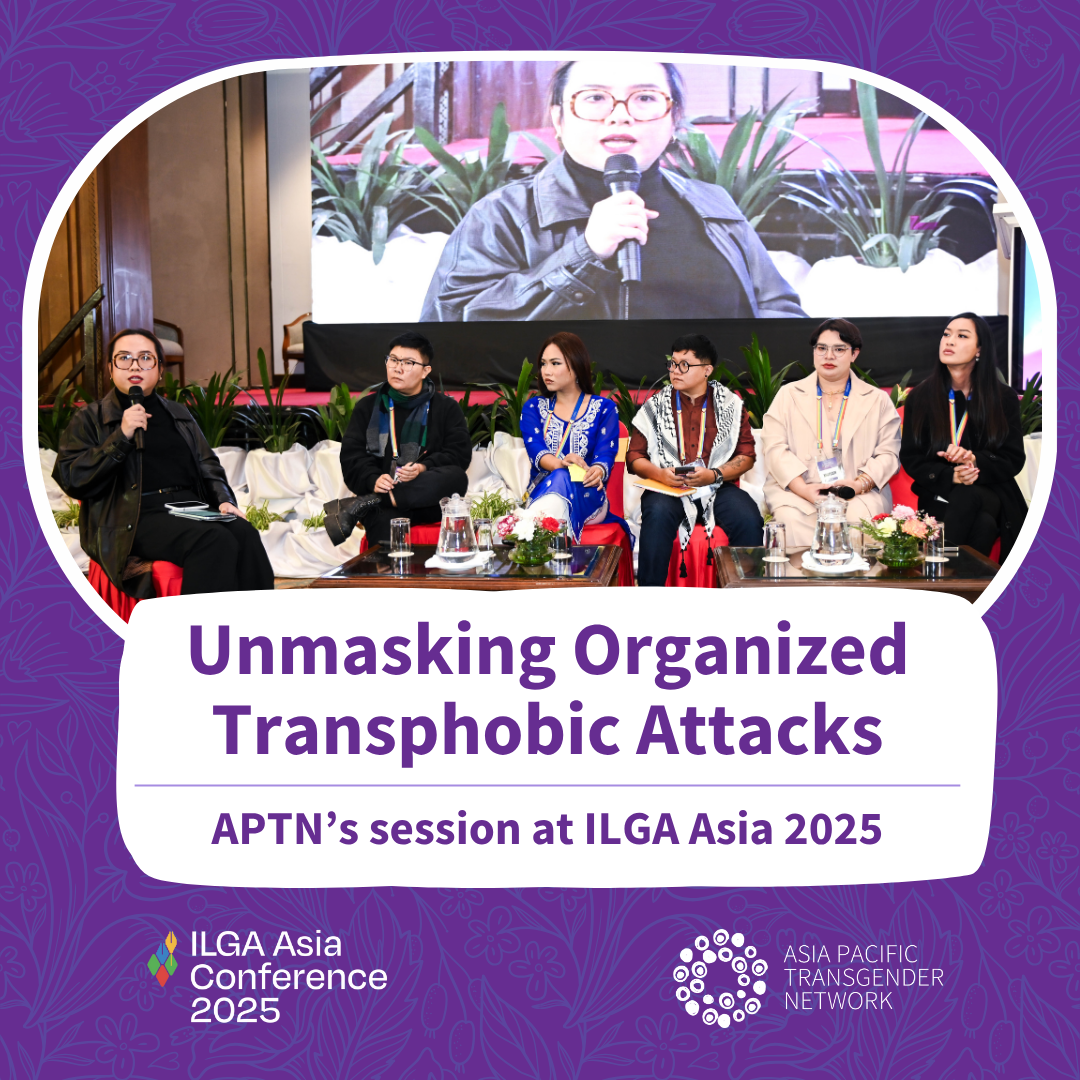

The rise of anti-trans movements across Asia is a growing concern, threatening the bodily autonomy, safety, and rights of trans communities. At the ILGA Asia 2025 Conference, the Asia Pacific Transgender Network (APTN) hosted a powerful panel discussion titled “Unmask Organized Transphobic Attack: Understanding Anti-trans Movements Across Asia and Our Fightback.” This session brought together trans activists from across the region to shed light on the diverse and complex forms of anti-gender mobilization in Asia, the systemic forces behind them, and strategies for resistance.
Understanding Anti-Trans Movements in Asia Pacific
APTN has observed a long-standing anti-trans movement across Asia, and its disturbing growth in recent years , fueled by a rigid and binary understanding of gender. While similar trends have emerged in the Global North—often driven by right-wing, religious extremist, and anti-gender ideologies—APTN highlights that the nature of anti-trans mobilization in Asia is not uniform and diverse key actors are involved. It takes different shapes across the region, influenced by colonial histories, authoritarian governance, religious fundamentalism, cultural relativists, conservative educational sectors, and patriarchal social systems.
The panel explored key examples of these attacks on trans rights:
- State-sponsored and religiously backed conversion therapy programs in Malaysia and Indonesia
- Religious/extremism disruption for Pride event in Mongolia
- Attempts to overturn trans protection acts in Pakistan
- Criminalization and discrimination against trans individuals, even in countries perceived as queer-friendly, like Thailand and Nepal
- Violence and legal persecution of trans sex workers, who face compounded vulnerabilities across the region
These instances underscore how systemic oppression is fueling a regression in trans rights, despite years of hard-fought progress.

Insights from Asian Trans Activists
The panel featured Best Chitsanupong Nithiwana (Thailand), Tama (Indonesia), Enkhmaa Enkhbold (Mongolia), and Angel Lama (Nepal)—activists with deep experience in grassroots organizing, policy advocacy, and community-led solutions. They shared lived experiences and lessons learned from their work on the ground, offering valuable perspectives on how to counter anti-trans movements effectively.
In the first half of the session, APTN presented key findings from their research projects:
- The Trans Thrive Project (TTP): Documenting hate crimes and violence against trans communities across Asia
- The Conversion Therapy Initiative: Exposing the harmful practices of conversion therapy and its impact on trans people’s well-being
Following the presentations, the panelists discussed the face of anti-trans mobilization in their locations, and strategies to push back against anti-trans mobilization, emphasizing the need for:
- Internal movement building to strengthen the fightback against the anti-right actors
- Cross-movement solidarity among trans, LGBTIQ, feminist, and social justice groups
- Increased visibility and advocacy efforts at national and international levels
- Support from allies and donors to strengthen and sustain trans-led organizations and initiatives
- Legal protections and policy interventions to safeguard trans rights across Asia
- Better access to mental health and well-being support groups and services
Building Collective Resistance
In the latter part of the session, we encouraged active participation from attendees, fostering a dialogue on community-driven solutions. Participants were invited to share their experiences, ask questions, and propose strategies to strengthen trans rights movements across Asia.
A key takeaway from the discussion was the importance of intersectional solidarity. The fight against anti-trans movements cannot be achieved in isolation—it requires the collective effort of trans activists, LGBTQ+ organizations, feminist movements, and social justice advocates worldwide.
The Path Forward
As anti-trans mobilization gains traction, urgent collective action is needed to counter these harmful trends. The APTN session at ILGA Asia 2025 served as a crucial platform to strategize and mobilize against transphobic attacks, emphasizing the power of community-driven advocacy and intersectional resistance.Moving forward, APTN is committed to integrating the insights gathered from this session into their programs, campaigns, and policy initiatives. We urge allies, donors, and stakeholders to support and uplift trans-led movements, ensuring that trans rights in Asia are not just defended, but advanced.
 News
News

 Resources
